
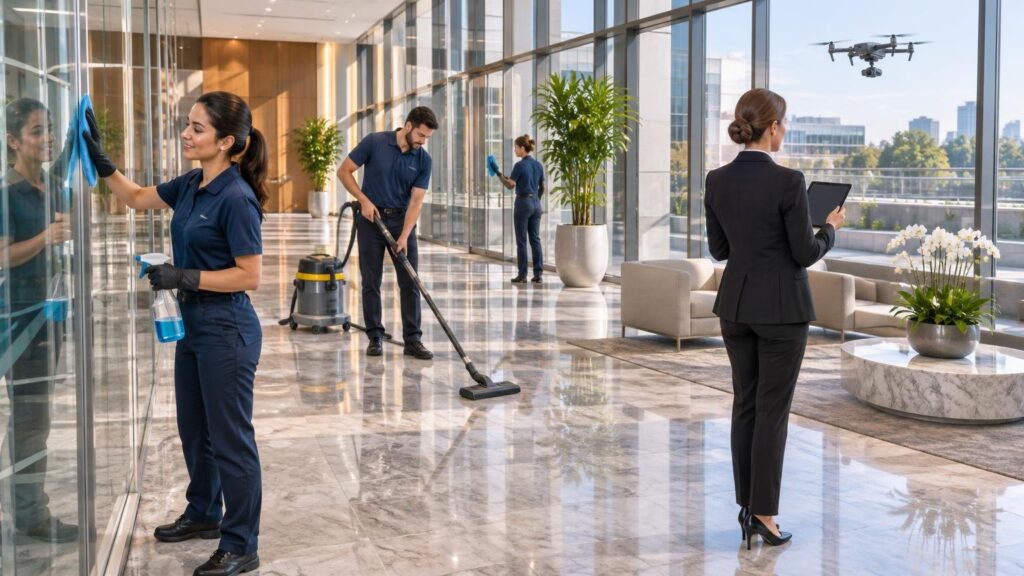
Commercial construction cleaning is the last quality-control step before a property changes hands. Even when the major work is complete, leftover dust, adhesive, paint overspray, and exterior debris can make a finished building look unfinished during the final walkthrough.
General contractors, project managers, owners, facility managers, and incoming tenants all need the same thing: a clean, accessible property that is ready for inspection and occupancy. A clear cleaning plan helps you define the scope, focus on the most visible areas, protect completed surfaces, and avoid last-minute scrambling before turnover.
Avoid Turnover Delays with a Thorough Final Clean
Routine jobsite cleanup keeps an active construction site workable. Final commercial construction cleaning has a different purpose. It focuses on removing the fine residue left after major trade work is done, so the property can be seen as it was designed to look.
Dust on window frames, labels on glass, caulk smears on metal, or debris near an entryway may seem minor on their own. During a final inspection, though, those details can pull attention away from the quality of the completed work. A polished final clean helps your team present the building without jobsite residue getting in the way.
Planning the final clean as part of the turnover schedule, not as an afterthought, gives you time to review cleaned areas, spot visible punch-list concerns, and complete touch-ups before an owner or tenant walks the property.
Define the Scope Before Cleaning Begins
Every commercial property has its own materials, access limits, and finished features. Before work starts, we recommend walking the exterior and documenting the areas that need attention. A detailed scope helps prevent missed surfaces and keeps everyone aligned on what “clean” means for the project.
Exterior turnover cleaning may include:
- Building facades, cladding, soffits, and upper elevations
- Windows, entry glass, awnings, and exterior lighting
- Sidewalks, ramps, railings, stairs, and loading areas
- Parking structures, walkways, signage, and common spaces
- Hard-to-reach surfaces where dust and debris collect
Along with the surface list, your plan should address access requirements, available water, allowed work hours, surface restrictions, safety procedures, debris disposal, and the desired completion date. We find that clear expectations make it easier for construction teams and cleaning crews to work around each other without creating new delays.
Prioritize High-Impact Areas Before Final Inspections
First impressions often begin at the main entrance. Glass doors, sidewalks, canopies, exterior signage, and lobby-facing windows should receive early attention because they are among the first areas owners, tenants, inspectors, and visitors see.
Cleaning these surfaces early gives you a better view of the property’s actual finish. Once dust and residue are gone, scratches in glazing, chipped paint, incomplete caulking, or uneven finishes may become easier to notice. That gives your project team time to address visible issues before the final walkthrough.
Coordinating the cleaning sequence with site leadership helps ensure work does not interfere with remaining trades, inspections, or access routes. Safety and accessibility also deserve close attention. Loose debris, dust, slippery residue, or discarded materials can create avoidable concerns in active exterior spaces.
Areas that often need careful review include:
- Entryways, sidewalks, stairs, and ramps
- Loading zones and service entrances
- Parking areas and parking structures
- Shared outdoor spaces and pedestrian paths
- Exterior areas near final construction activity
Remove Jobsite Residue Without Damaging Finished Surfaces
Construction residue comes in many forms. Fine dust can settle into ledges and seams. Paint overspray, tape adhesive, grout haze, mortar splatter, silicone, protective film, and labels can cling to newly completed surfaces. Removing each material safely starts with identifying both the residue and the surface underneath it.
New glass, metal panels, stone, stucco, painted surfaces, roofing components, signage, and specialty coatings may all require different cleaning methods. A method that works well on one surface may leave marks, discoloration, or other damage on another. When needed, we recommend testing a small, less visible area and following manufacturer guidance for high-value or delicate materials.
Controlled cleaning matters just as much as product selection. Runoff, debris containment, nearby landscaping, pedestrian access, and adjacent finishes should all be considered before exterior work begins. A careful process protects completed work while removing the residue that makes a new property appear unfinished.
Use Drone Access for Hard-to-Reach Exterior Surfaces
Multi-story buildings and tall exterior elevations can be difficult to clean during turnover. Upper facades, high windows, cladding, soffits, and architectural details may be challenging to reach with ladders, lifts, or ground-based methods alone.
Drone-powered cleaning can support commercial construction cleaning where access is limited or upper surfaces need attention. Still, it is not the right choice for every area. We evaluate building height, surface type, nearby structures, pedestrian traffic, access conditions, and the condition of the surface before selecting an approach.
A combination of drone-powered and traditional exterior cleaning methods can be selected based on the property’s needs. Ground-level details, confined spaces, delicate finishes, and areas requiring close manual attention may call for a traditional approach. The best plan is the one that provides safe access while respecting the completed materials.
Create a Confident Final Handover Plan
Final cleaning works best when it happens after major dust-producing work, exterior finishing, and heavy trade activity are substantially complete. Cleaning too early can lead to freshly finished areas being recontaminated, which creates repeat work and added pressure near turnover.
A simple turnover checklist can help your team confirm that each area has been reviewed. Include completed locations, remaining tasks, surface-specific concerns, and the person responsible for each item. Pay close attention to entrances, glazing, facades, walkways, loading areas, upper elevations, and other features that will be highly visible during handover.
A well-timed final clean gives you more than a better-looking property. It gives your team a clearer view of the finished work, time to address visible punch-list items, and a more orderly path to inspection, occupancy, and final turnover.
Keep Your Turnover Schedule Moving
Altura Drone Services provides commercial construction cleaning that helps present your property at its best when deadlines matter. Our team can address exterior cleaning needs with a focused approach that supports a polished final presentation. Contact us to discuss your project and request service.