
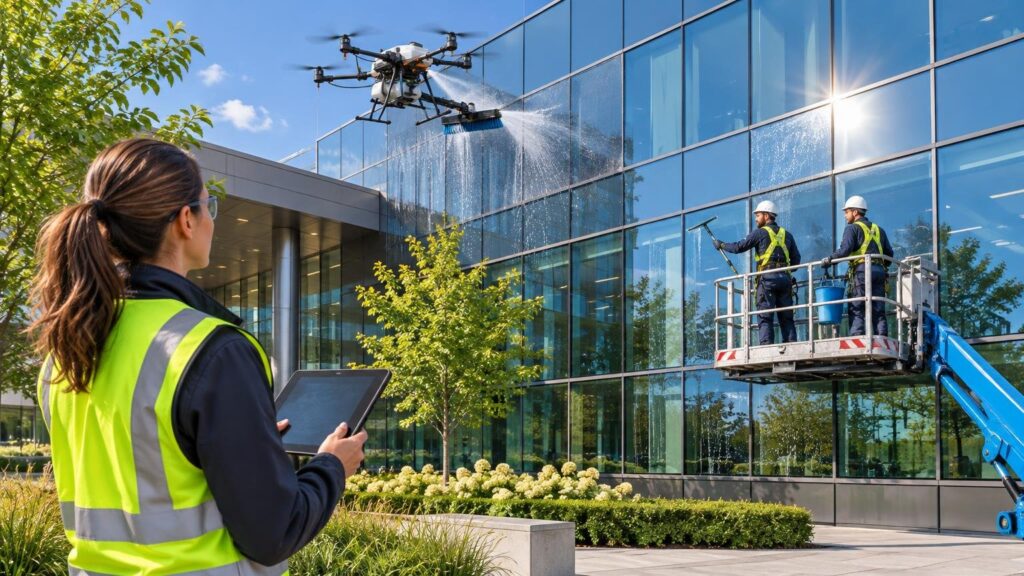
Reach High Exteriors Without Disrupting Business
Office buildings collect grime in ways that are hard to ignore. Algae, mildew, dust, pollution, bird droppings, and water runoff can leave upper walls, façades, roofs, and details looking neglected. The challenge is not only getting those surfaces clean, but doing so without turning an active office property into a work zone.
For years, exterior cleaning often meant bringing in lifts, scaffolding, or rope access crews. Those methods can be appropriate in certain situations, but they may also affect parking, sidewalks, entrances, tenant access, and normal business activity. When considering drone cleaning for office buildings, it is important to compare the full picture, not simply the equipment parked outside.
Drone-powered cleaning gives trained crews a way to reach many elevated exterior areas while working from the ground. Instead of relying on large access equipment for every high surface, a controlled cleaning approach can address difficult areas with a smaller on-site footprint.
The right method still depends on your property. Building height, surface materials, layout, contamination, nearby obstacles, and maintenance goals all matter. A thoughtful plan considers safety, access, cleaning quality, and tenant experience alongside the work itself.
Drone Cleaning for Office Buildings Reduces Access Barriers
One of the biggest advantages of drone cleaning for office buildings is reduced ground-level disruption. Lift equipment may need room for delivery, setup, movement, and safe operation. On a busy office campus, that can mean closing off parking spaces, redirecting cars, or limiting access near building entrances.
With drone-powered cleaning, crews can often work with a more contained setup. This can be especially helpful where parking is limited, drive lanes are narrow, or visitors and employees need clear routes throughout the day.
A smaller equipment presence may help preserve the polished appearance you want visitors and tenants to see. Rather than placing a large lift in front of a building for extended periods, facilities teams may have more flexibility to schedule exterior cleaning around regular operations.
Depending on the site, a drone-based approach can help reduce the need for:
- Large staging areas near entrances or sidewalks
- Temporary parking restrictions across multiple spaces
- Frequent equipment repositioning around the property
- Major detours for employees, visitors, and tenants
Safety is still the foundation of every project. Drone cleaning allows more work to be performed from the ground, which can reduce the need for workers to spend time in elevated baskets or on scaffolding. That does not mean the work happens without planning. Appropriate aviation authorization, site assessments, trained cleaning crews, responsible flight practices, and controlled work zones all play a role in a safe service plan.
Lift Access Brings Hidden Constraints
Lift access can bring a long list of practical details that are easy to miss when reviewing an exterior cleaning proposal. Equipment has to arrive, be set up, and move safely around the site. Depending on the property, crews may also need to consider ground protection, power or fuel needs, security procedures, and access through gates or service areas.
Crowded office properties can make those steps more complicated. A lift may need room to turn, park, and extend. That can affect drive lanes, landscaping, sidewalks, and nearby businesses. It may also require advance notice for tenants and coordination with property security.
Still, lifts have a clear place in commercial exterior work. When a project requires prolonged hands-on access for repairs, sealing, detailed restoration, or close inspections, lift access may be the better choice. The question is whether it is needed for every part of a routine exterior cleaning project.
Before choosing an access method, it is useful to look beyond equipment and labor. Your plan should account for indirect impacts such as:
- Tenant and visitor notifications
- Parking and traffic coordination
- Sidewalk, landscape, and vehicle protection
- Security access and work-zone planning
- Operational interruptions during the service
A clear scope helps you see where lift access is truly necessary and where drone-powered cleaning may reduce the burden on your property.
Compare Safety, Speed, and Surface Results
Project speed is not determined by one tool alone. Lift-based cleaning can require setup time and repeated repositioning as crews move between building sides and elevations. Drone cleaning for office buildings may begin with a smaller footprint after the site has been reviewed and prepared, but actual timing depends on the building’s design, work-zone limits, surface condition, and the amount of buildup present.
Cleaning results matter just as much as access. A tall building may have several different exterior materials, including painted areas, stucco, metal panels, glass-adjacent surfaces, signage, and architectural accents. Each material may need a different cleaning process to remove grime without causing damage.
Before work begins, consider the details that guide a safer cleaning plan:
- The exterior materials and their condition
- Areas with algae, mildew, runoff stains, or heavy grime
- Nearby windows, doors, signage, vehicles, and landscaping
- Pedestrian paths and building entrances
- Obstacles such as trees, power lines, awnings, or neighboring structures
The cleaning method, solution strength, water pressure, and dwell time should fit the surface being treated. Simply reaching a high area is not enough. The goal is to remove organic growth and dirt while respecting the building materials and the activity happening below.
When you review a provider, ask how the crew will protect pedestrians, vehicles, landscaping, entrances, windows, and nearby businesses. It is also reasonable to ask about commercial experience, insurance, FAA certification of remote pilots, and how occupants will be informed during the work.
Request a Smarter Exterior Cleaning Plan
Office building cleaning should not force you to choose between curb appeal and business continuity. A customized assessment can identify where drone-powered cleaning may offer the greatest access benefits and where lift access remains the better fit. A thorough evaluation considers difficult-to-reach exterior areas with the property’s day-to-day operations in mind.
Before requesting an estimate, gather useful details about your building. Photos of problem areas, building height, exterior materials, parking conditions, access limits, tenant schedules, and the last exterior cleaning date can all help shape a more accurate scope of work.
The best choice is the one that fits your building, protects the people around it, and treats each surface with the right cleaning process. A site-specific plan gives you a clearer path to maintaining a professional exterior without creating unnecessary disruption inside or outside the office.
Protect Your Building With a Smarter Cleaning Plan
At Altura Drone Services, we help property managers assess exterior cleaning needs with practical, low-disruption solutions. Learn how drone cleaning for office buildings can support safer access and more efficient maintenance for your property. When you are ready to discuss your building’s requirements, contact us for a tailored recommendation.