
Balance Costs, Safety, and Curb Appeal
Shopping center pressure washing is a business decision, not just another maintenance chore. When storefronts, sidewalks, rooflines, and parking areas look clean, your center feels more welcoming to customers and more professional to tenants. Clean exterior surfaces also help protect the reputation you have worked to build.
Heavy foot traffic, vehicles, deliveries, and South Florida humidity can leave their mark quickly. We often see oil spots, discarded gum, mildew, algae, dirt, and dark buildup around entryways, sidewalks, loading areas, and trash enclosures. Waiting too long can make a property look neglected, create slick walking surfaces, and allow stains to become harder to address.
The choice between an in-house team and an outside provider depends on your property’s size, cleaning needs, staff capacity, safety standards, and budget goals. Below, we break down the practical differences so you can choose a model that fits your center instead of forcing your center to fit the model.
Compare the Full Cost of Each Approach
An in-house pressure washing setup can seem simple at first because your maintenance staff is already on site. Still, the true cost includes much more than the pressure washer itself. Employees need time to perform the work, learn proper methods, prepare the area, move equipment, and clean up afterward. That time may pull them away from repairs, tenant requests, inspections, landscaping oversight, or daily upkeep.
In-house operations may also require you to plan for equipment, storage, maintenance, and replacement. Depending on the work your property needs, the setup can involve hoses, surface cleaners, water access, protective gear, detergents, fuel, trailers, and tools for reaching elevated areas. Equipment that sits unused for long periods can still need care before it is ready for service.
When you outsource shopping center pressure washing, the scope can be planned around the areas that need attention and how often they need it. That may make it easier to organize exterior maintenance as part of a recurring property plan rather than treating every cleaning need as an unexpected project.
When comparing options, we recommend looking beyond the lowest initial estimate or the apparent convenience of handling everything internally. Consider the long-term impact of:
- Staff time, training, supervision, and overtime
- Equipment upkeep, storage space, repairs, and replacement
- Cleaning quality across sidewalks, facades, roofs, and parking areas
- The risk of surface damage from improper pressure or cleaning products
A low-cost approach can become expensive if stains remain, exterior materials are damaged, or employees must repeat work that was not completed correctly the first time.
Match Control to Your Property’s Needs
The strongest argument for an in-house team is immediate access. On-site personnel can respond quickly when a spill appears near an entrance, graffiti needs attention, or a trash enclosure becomes messy. For smaller touch-ups, daily upkeep, and fast responses, experienced maintenance staff can be a useful part of your property care plan.
That said, routine maintenance and large-scale exterior cleaning are not always the same job. A shopping center may need attention on storefront facades, sidewalks, awnings, windows, roofs, loading areas, and parking structures. Each surface can call for a different cleaning method, pressure level, solution, or access plan.
Outsourcing can bring structure to work that is too large or specialized for an internal crew. We can document the service scope, focus on high-traffic areas, and track the condition of surfaces before and after cleaning. This kind of consistency is especially helpful when you manage several properties with different layouts, building heights, tenant mixes, and access challenges.
A dependable service plan should account for details such as:
- Customer and tenant traffic patterns
- Surface materials and visible staining
- Water access and drainage considerations
- Work areas near vehicles, storefronts, and entrances
- Hard-to-reach walls, windows, rooflines, and canopies
Rather than using the same plan everywhere, we recommend matching the cleaning schedule and methods to how each center actually operates.
Reduce Risk During Exterior Cleaning
Commercial pressure washing involves real safety concerns. Wet pavement can become slippery, hoses can create trip hazards, and high-pressure water can move debris unexpectedly. Cleaning solutions also need to be selected and handled carefully. When customers, tenants, employees, and vehicles are nearby, work zones need clear planning and control.
If you rely on an in-house crew, your team needs proper training, personal protective equipment, and procedures for securing the work area. They also need to understand which surfaces can handle stronger pressure and which require a gentler approach. The wrong technique can leave marks, force water where it does not belong, or damage sensitive exterior finishes.
Elevated surfaces add another layer of risk. Upper facades, rooflines, windows, canopies, exterior signage, and other high areas may require ladders, lifts, or scaffolding. Those methods can affect customer access, parking availability, and normal tenant operations.
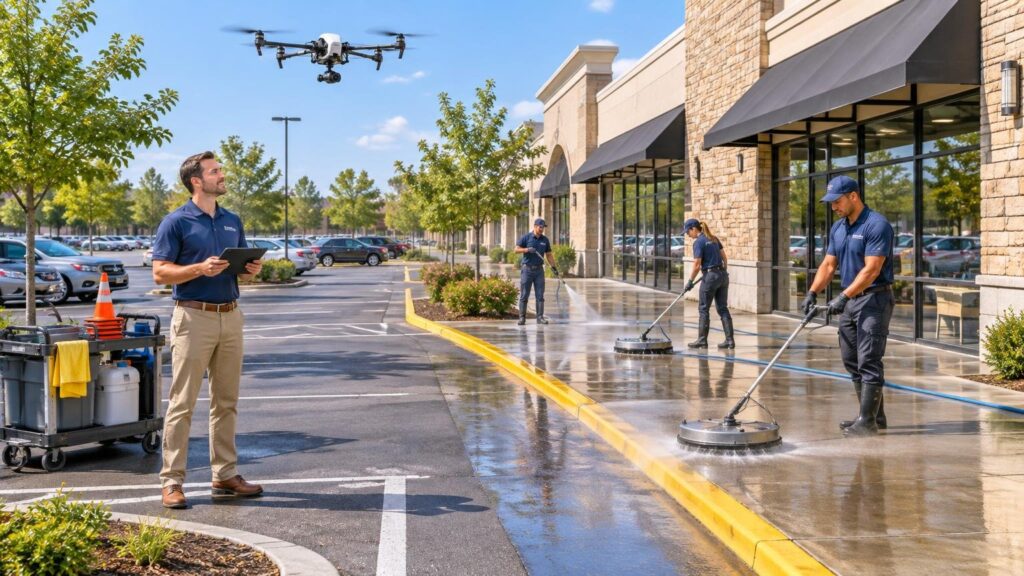
For certain conditions, drone-assisted exterior cleaning can offer a practical alternative to relying on scaffolding in every situation. Our operators use drone-assisted methods to access hard-to-reach exterior areas with less disruption around storefronts and parking spaces. This can be especially useful in South Florida, where humidity, algae, mildew, salt exposure, and other buildup can affect elevated surfaces.
Choose an in-House, Outsourced, or Hybrid Model
An in-house model can make sense when you have skilled maintenance personnel, room to store equipment, and frequent small cleaning needs. It may work well for spot cleaning, waste-area upkeep, quick response tasks, and daily exterior touch-ups that do not require elevated access or specialized equipment.
Outsourcing is often the better fit when your center needs deep cleaning across a large area, difficult stain removal, roof or window cleaning, elevated exterior work, or a recurring plan that would overwhelm internal staff. Bringing in trained exterior cleaning professionals can allow your maintenance team to focus on the responsibilities they are already equipped to handle.
For many centers, a hybrid approach is the most practical choice. Your on-site team can manage daily conditions and immediate issues, while a specialized provider handles scheduled deep cleaning and hard-to-reach surfaces. This gives you direct control over the details customers notice every day without asking your internal staff to take on work outside their normal role.
Build a Plan Around the Property You Manage
The right choice is rarely all in-house or all outsourced. Start by reviewing your property layout, staffing availability, exterior materials, access challenges, tenant expectations, and how quickly visible buildup returns. Then separate simple touch-up work from the larger projects that require trained crews and specialized methods.
A clear cleaning plan should protect customer access, support your tenants, and keep difficult exterior areas from becoming an afterthought. When you evaluate the full workload instead of only the immediate task, it becomes easier to assign each job to the right team and maintain a cleaner, safer-looking shopping center over time.
Improve Results Without Adding More In-House Strain
Altura Drone Services can handle the demanding exterior work that often stretches internal teams thin. Our shopping center pressure washing service helps maintain polished, professional-looking common areas with a dependable approach. To discuss your property’s needs and request a tailored plan, contact us today.