
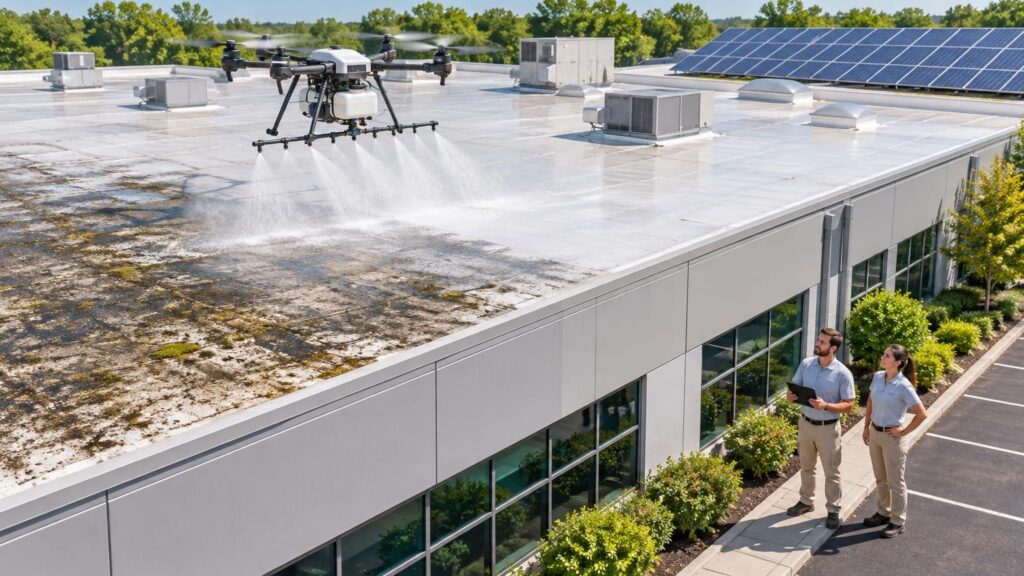
Protect Your Property Without Putting Workers at Risk
Commercial roofs collect stains, algae, organic growth, and debris over time, especially in South Florida’s sunny, humid conditions. When it is time to clean them, property owners and facility managers have to balance appearance and upkeep with safe access to elevated areas.
Traditional roof cleaning may involve ladders, lifts, scaffolding, or workers walking across the roof. Those methods can be appropriate in some situations, but they can also create access challenges around busy buildings. Drone roof cleaning gives us another way to reach difficult areas while reducing the need for personnel to work directly on steep, tall, or hard-to-access roof sections.
As a veteran-owned provider, we use safety-focused drone-assisted methods to clean commercial exteriors, roofs, windows, and other elevated surfaces across South Florida. Every property is different, so the first step is understanding the building, the roof, and the activity happening below.
How Drone Roof Cleaning Works on Commercial Sites
A successful drone roof cleaning project begins well before cleaning solution is applied. We assess the site to understand how the building is laid out and what needs protection during the work. This planning helps us choose a cleaning approach that fits the roof’s condition and access needs.
During a site assessment, we look at factors such as:
- Building height and roof access points
- Roof material, slopes, and visible buildup
- Nearby trees, power lines, structures, and obstacles
- Drainage areas and surfaces below the roofline
- Parking, pedestrian paths, tenant activity, and occupied spaces
Once the plan is in place, drone-assisted equipment can apply appropriate cleaning solutions to selected roof areas from a controlled position. The method, pressure level, and cleaning solution should match the roof material and its current condition. A surface that needs gentle treatment should not be handled the same way as a more durable exterior area.
Controlled work zones matter just as much as the cleaning itself. Before work begins, we consider pedestrians, vehicles, landscaping, nearby structures, and ongoing building operations. Clear communication with on-site staff helps everyone understand where work is happening and what areas may need temporary protection or limited access.
Where Drone Roof Cleaning Delivers the Most Value
Drone-assisted cleaning can be especially helpful for commercial properties where access is the main challenge. Tall buildings, complicated rooflines, and tight exterior spaces can make traditional equipment difficult to place without affecting the people and property below.
We often see strong potential for drone roof cleaning at properties such as:
- Multifamily communities and mixed-use buildings
- Office buildings, hotels, and retail centers
- Warehouses and industrial facilities
- Medical facilities and educational campuses
- Properties with limited parking or landscaped grounds
For a retail center, a lift setup may affect parking and customer traffic. At a multifamily property, extensive roof access equipment can create extra activity near residents’ homes. Buildings with narrow access points, crowded tenant areas, or sensitive surfaces below the roofline may benefit from an approach that reduces the amount of large equipment needed on the ground.
Regular cleaning also supports a better-looking property and a more organized maintenance plan. Removing visible stains, algae, organic buildup, and debris can help your exterior look more professional. It also gives property managers an opportunity to keep an eye on roof conditions over time and address concerns before they become harder to manage.
Safety, Compliance, and Property Protection
Working at height always calls for careful planning. By reducing the need for workers to walk across roof areas or depend heavily on ladders, scaffolding, and boom lifts, drone-assisted methods can help reduce exposure to fall-related risks. That does not mean every roof can or should be cleaned the same way. It means access should be planned around the actual property.
When you are considering a provider, it is wise to ask how they approach flight operations, safety planning, insurance coverage, and communication with site staff. FAA requirements and controlled drone operations are important parts of professional aerial work. Our approach is built around evaluating the site and carrying out cleaning work with care.
Property protection should stay part of the conversation from start to finish. A thoughtful plan considers:
- Roof-safe cleaning methods for the surface involved
- Responsible runoff management
- Protection for landscaping, windows, vehicles, and nearby surfaces
- Clear coordination with property managers and building staff
- A controlled area below and around the active work zone
The goal is not simply to make a roof look cleaner. It is to perform the work in a way that respects the building, the people using it, and the areas surrounding it.
Comparing Drone Cleaning with Traditional Access Methods
Conventional roof cleaning may require scaffolding, aerial lifts, ladders, or significant rooftop foot traffic. These methods can be useful when a close, hands-on approach is needed, but they may also require more setup space and more coordination around the property.
Drone-assisted cleaning offers a different option. Reduced reliance on large access equipment may be helpful when parking is limited, entry points are narrow, landscaping is close to the building, or tenant and customer activity needs to continue nearby. It can also reduce the need to place equipment over delicate ground surfaces or busy walkways.
Still, drone roof cleaning is not a one-size-fits-all answer. Some buildings may be better served by ground-based cleaning, while others may need a combination of drone-assisted and traditional methods. A professional assessment helps identify the approach that makes sense for your roof material, building height, access limits, and day-to-day operations.
Plan a Safer Roof Cleaning Strategy
Waiting until stains and buildup become heavy can make exterior maintenance feel more complicated than it needs to be. A practical roof cleaning plan starts with the surface itself, then considers building height, safe access, drainage, landscaping, and the people using the property each day.
Before selecting a cleaning method, review your roof’s condition and the limits of the site. The right plan should protect the roof material while accounting for tenant activity, parking, pedestrian areas, and the safest way to reach elevated surfaces.
A basic pre-cleaning checklist can include:
- Confirm the roof material and any manufacturer cleaning guidance
- Identify drainage paths, landscaping, vehicles, and surfaces below
- Review access limitations and active tenant or customer areas
- Establish a controlled work zone and communication plan
- Select cleaning methods and solutions appropriate for the roof condition
Considering these details before work begins helps property managers choose a cleaning strategy that supports safe access, responsible maintenance, and long-term care for the building.
Get Reliable Roof Cleaning Without Added Disruption
Altura Drone Services provides drone roof cleaning designed to help commercial properties maintain cleaner exterior surfaces with minimal interruption. Our team can help assess your building’s needs and recommend an approach suited to its conditions. Contact us to discuss your commercial roof cleaning project.